Highlights:
- Our track record is all the proof you need that acquisitions strengthen organic growth
- The acquisitions we managed to integrate quickly, were especially successful
- We’re not afraid to divest profitable companies
- As CFO I want to facilitate, to help realize ambitions
Driving organic growth. That’s an important mission for Wolters Kluwer today. When transitioning in the last two decades from a traditional publisher to an almost digital information provider, Wolters Kluwer was in the top of the list of the Netherlands most active strategic M&A players. What have they learned and how important is M&A for Wolters Kluwer today?
Wolters Kluwer is a silent force. The company’s strategy has been fairly consistent and gradually evolving; its performance is stable and strong. So who runs things over at Wolters Kluwer, and how do they approach work?
Arjan Groen and Jan Peter Balkenende discussed long-term M&A value creation with Wolters Kluwer CFO Kevin Entricken as part of the “Captains of Industry” series.
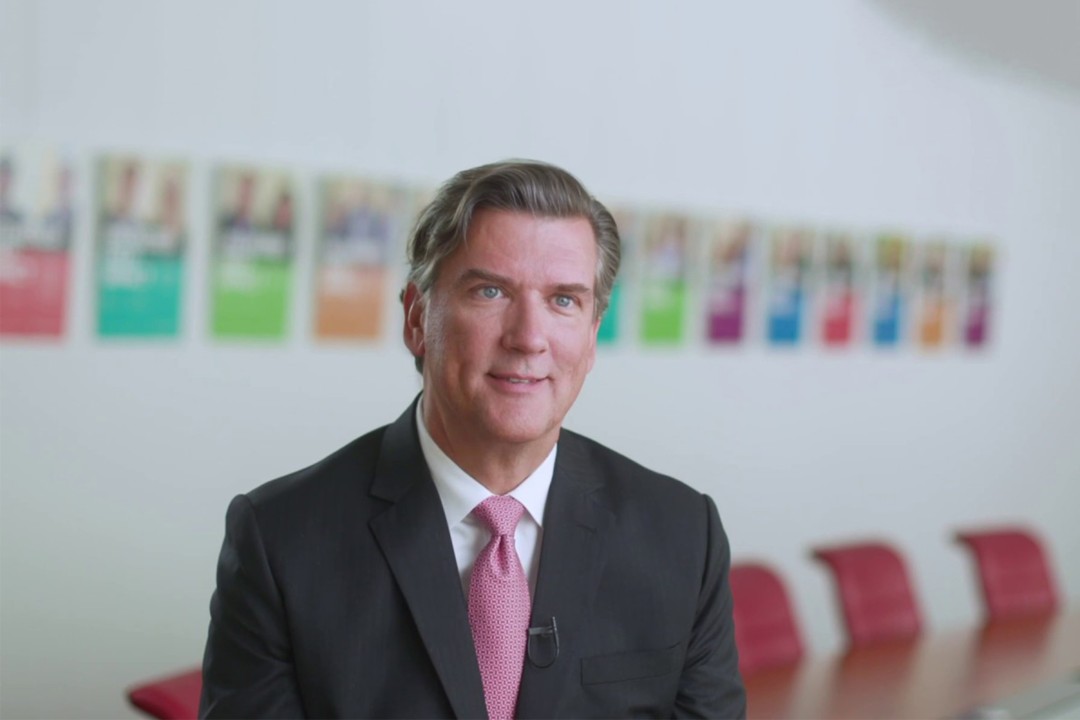
The video conference is set to start at 9 a.m. local US time in New York and the Wave Space at EY’s Amsterdam office. Kevin Entricken jokingly comments on the backdrop, a data center built by EY’s IT staff: “Interesting place, maybe I should talk to my cybersecurity officer?”
Arjan Groen laughs: “We originally had books in the background here, but I decided that wasn’t really appropriate in view of Wolters Kluwer’s transformation. No books, I said.”
As Executive Board member and CFO, Kevin Entricken is uniquely aware of Wolters Kluwer’s successful efforts to create long-term value and develop the company’s M&A policy in recent years.
Groen and Balkenende have interviewed captains of industry Ingrid Thijssen (Chair VNO-NCW), Jacques van den Broek (CEO of Randstad), Frans Muller (CEO of AholdDelhaize), Frans van Houten (CEO of Royal Philips), Pieter van Oord (CEO of Royal Van Oord), Jeroen van der Veer (Chairman of Royal Philips and former CEO of Royal Shell), Petri Hofsté (#1 Supervisory Board member in The Netherlands) and Thierry Vanlancker (CEO of Akzo Nobel) on the same subjects. For this edition, they’re talking to Kevin Entricken, who has been with Wolters Kluwer for 18 years and served as Chief Financial Officer since 2013.
Long term
Arjan Groen: “So what’s the next step in Wolters Kluwer’s journey, and how does the company view long-term value creation?”
Kevin Entricken: “Nancy McKinstry has been our CEO for seventeen years now; she definitely has a long-term perspective. I’ve been serving as CFO for seven years now. We explore every type of investment—whether organic or through M&A—to achieve our goals and strengthen our portfolio. We’re all about long-term thinking: Wolters Kluwer has been around over 180 years. The last two decades have been all about change. We’ve evolved over that period from a paper publisher to a company that’s now 93 percent in digital and services.”
Arjan Groen mentions that Akzo Nobel CEO Thierry Vanlancker was quoted in a previous interview as saying that he felt a four-year term was too short while an eight-year term was too long. By that measure, CFO Kevin Entricken and CEO Nancy McKinstry are now far past their expiration date.
Kevin Entricken: “People’s perceptions of time can be so different. So many things are changing at such a rapid pace in our current world. Cyber security really wasn’t that much of an issue when I joined Wolters Kluwer. These days, it’s our top priority. This has taught us we need to be prepared for the future. Just look at the current situation; COVID-19 has clearly caused a lot of damage around the world. Still, there are always some constants. People still need health care. They still need to pay their taxes and meet other requirements. In the meantime, the issue of sustainability is becoming increasingly important. Circumstances may have changed, but we still have many of the same long-term goals. In this context, management continuity certainly isn’t a bad thing.”
Value creation
Jan Peter Balkenende: “There’s a lot of focus on long-term value creation. What’s your take on this?”
Kevin Entricken: “Every organization has to create value and justify its own existence. Here at Wolters Kluwer, our stakeholders, shareholders, customers and employees are our top priority. Their interests are at the top of our list. Increasingly, though, we’re also focusing on society in the broader sense. How can we achieve our objectives in a sustainable way and communicate that commitment to those stakeholders, shareholders, customers and employees? How can we make sure our actions benefit all of society? How do we make sure our products and services help make the world a better place?”
Jan Peter Balkenende: “Do you see any geographical differences when it comes to value creation across Europe?”
Kevin Entricken: “We view Wolters Kluwer as a global company. Still, there are definitely some differences. Let’s say you cross the French border from Germany with a bunch of tax filing tools: everything is now different and those valuable tools are suddenly useless. Still, one thing is always the same no matter where you go: increasingly often professionals all over the world are wondering how they can do more with less. They want to be more efficient, and create greater value in a more sustainable way. That’s our focus here at Wolters Kluwer. It’s what we’re all about.”
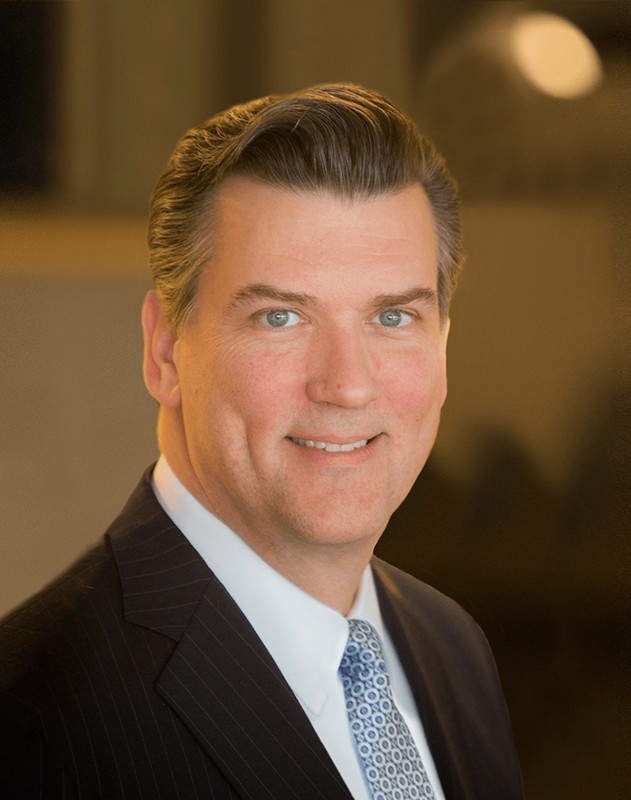
Picture: Kevin Entricken, CFO of Wolters Kluwer
Arjan Groen: “Have you seen stakeholders’ attitudes change in that respect, compared to ten or twenty years ago?”
Kevin Entricken: “Keeping our different stakeholders happy can be a real balancing act. Shareholders tend to want ‘twice the results with half the risk.’ Customers say they want twice the value of our products at half the price, while employees want double the wages for half the amount of hours worked. In the end, you need to strike the right balance for all our stakeholders. If you give one of them too much, you’ll end up shorting the other.”
Arjan Groen: “When it comes to risk exposure, would you say shareholders run less risk than, for example, employees and suppliers?”
Kevin Entricken: “It’s all a matter of setting priorities and finding that balance. What does an organization need to survive? Businesses can trim a lot of fat, there are plenty of non-essentials. There’s one thing we can’t do without though: Our customers! We have to keep creating value for them on a daily basis, and we can’t keep them happy without our driven and dedicated employees. We like to say ‘our most important assets leave the office at the end of every day.’ That means we need to make sure our employees feel their work here is worthwhile, day in, day out. Even when almost everybody is working from home, as is the case now. On the other hand, our shareholders make all that possible. They’re our biggest supporters. Some have been with us for many years.”
Strategy
Arjan Groen: “So would it be fair to give the various stakeholders more influence on strategic decisions, and offer them greater insight into proposed mergers and acquisitions?”
Kevin Entricken: “We need to be very clear about our vision and long-term business goals in all communications with the investment community, including our shareholders. Every investor will tell you they want an appropriate return on their investment. You need to deliver that return, or they will look for returns elsewhere. That should be an important KPI for every organization; measuring successes or failures. Acquisitions can help an organization expand, but they’re not risk-free. It’s up to us to minimize that risk and deliver the expected return through proper due diligence and integration. Our shareholders have a very clear vision, and we make sure to factor that into every investment decision. That also applies to M&A. They trust us to bring to bear all of our insights and experience to make the right decisions when making acquisitions or greenlighting organic investments.
Kevin Entricken: “In some cases, no M&A is the best M&A strategy.”
Arjan Groen: “Does M&A really drive innovation, or is it actually a substitute for innovation?”
Kevin Entricken: “M&A definitely has a role to play in an organic strategy. For example, if we’re developing a certain product and realize that acquiring another company has the potential to speed up that process. Our acquisitions are generally close to home. Don’t expect Wolters Kluwer to suddenly set up a fifth division. After an acquisition, we assess what went well and what could have been improved in order to identify any useful lessons. In some cases, it’s better not to push ahead with a proposed takeover because we simply can’t solve the target company’s challenges. In some cases, no M&A is the best M&A strategy. Still, our track record shows that acquisitions have helped drive our business forward and accelerated organic growth. That’s especially true in the case of health, tax & accounting, but it also applies to environmental, health & safety.”
Integration
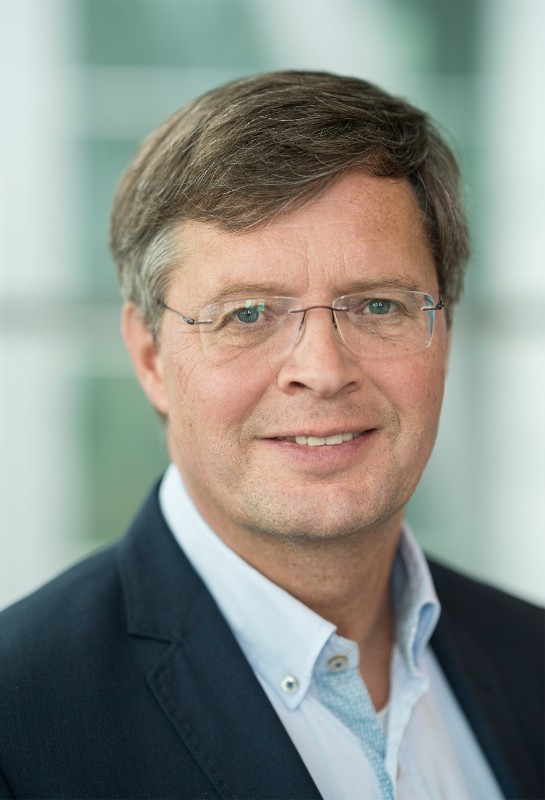
Picture: Jan Peter Balkenende
Jan Peter Balkenende: “So what does that mean in terms of integration? Is it all about speed? Or is the focus on protecting new companies against existing business?”
Kevin Entricken: “When I look at our acquisitions over the past decade, the ones we integrated quickly were generally the ones that performed best. The new entity then benefits from everything Wolters Kluwer has to offer. We want to add something substantive to the mix. That could take the form of development expertise, sales & marketing or innovation. Successful acquisitions are all about identifying and achieving synergy.”
Arjan Groen: “Genuine integration always requires change. How does that affect current management; will there be changes or does everyone stay on board?”
Kevin Entricken: “We tend to focus on entrepreneurship when it comes to acquisitions. We value entrepreneurial spirit, so we certainly don’t shake up the target’s management just for the sake of it. On the contrary. It’s all about keeping the spirit alive. We’re very good at that. However, there are also situations where the newcomer’s management tells us they want to make a change. That’s fine too, as long as we can help the company grow. We make sure every acquisition is based on a clear strategy. We also prepare an integration plan and a road map. Together, those factors help ensure success.”
Kevin Entricken: “Companies that do end up in the shop window during this crisis, the weaker ones, aren’t good acquisition candidates for us.”
Arjan Groen: “Has the current COVID-19 situation changed things? You hear people say ‘this is a great time for acquisitions.”
Kevin Entricken: “The number of transactions is stable. Still, I don’t see this period as an opportunity for bottom fishers, which—I should point out—isn’t what we are anyway. Many companies that don’t necessarily have to sell are postponing divestments. However, those are the companies we’re actually interested in; the successful organizations that can ensure growth. In general, we are interested in high growth, high quality, strong product, etc.. Like our recent acquisitions of XCM and eOriginal show. Companies that do end up in the shop window during this crisis, the weaker ones, aren’t much use to us.”
Divestments
Arjan Groen: “So what makes for a good divestment and how do you time one?”
Kevin Entricken: “You need to reassess your portfolio, every single year. In some cases we come to the conclusion that a company is better off in the hands of other owners. For strategic reasons, that is. I’ll give you an example where we divested a really solid business. A few years ago, we sold ProVation Medical, a software company operating in the health-care sector. ProVation Medical helps hospitals and surgeons to document surgical procedures with smart software. We always try to identify the best possible opportunities. At the time, we felt clinical solutions would be more effective in providing better diagnoses and treatments for patients. If we find an owner that could drive more value from the asset than Wolters Kluwer, we’ll be happy to divest. We’re not afraid to take radical measures. The divestment of our educational division would be a good case in point.”
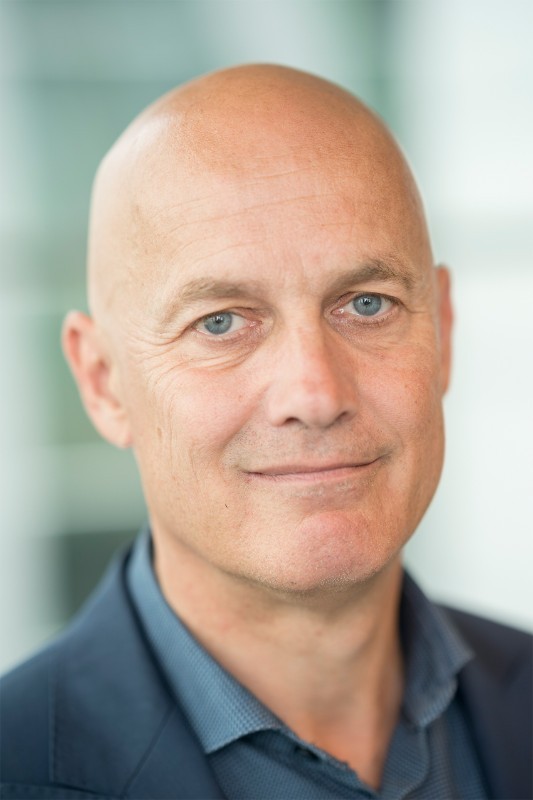
Picture: Arjan Groen
Arjan Groen: “You have shown an impressive long-term development; from paper to digital. What’s your next step?”
Kevin Entricken: “The world is changing and we’re changing in step with it. In 2003, print was still our main source of revenue. Today, it only accounts for 10 percent or less. Customers wanted digital solutions, so we reinvented ourselves. Software now accounts for 40 percent of our revenue and I expect it will remain one of our main sources of growth. We offer excellent digital content solutions. So how can we apply prime technology to convert them into expert solutions? The answer involves a marriage between emerging technologies and our own unique know-how. In the end, it’s all about helping our customers increase their productivity.”
CFO role
Jan Peter Balkenende: “So what about your own role as CFO? How are you helping to advance the company’s interests?”
Kevin Entricken: “It’s crucial that the Management Team members are all on the same page. Nancy and I have complete faith in the expertise of for example our health-care professionals. As CFO, I want to facilitate, to help realize ambitions. I want to lead the way in terms of achieving our targets within the available resources.”
Kevin Entricken: “A good head for numbers alone doesn’t make you an effective CFO. The job involves guiding and facilitating change.”
Arjan Groen: “So what makes a good CFO, in that context?”
Kevin Entricken: “It’s important to stay close to the business. You also need a thorough understanding of the markets you’re operating in, your customers and your competitive position. That knowledge will help you make sound decisions. A good head for numbers alone doesn’t make you an effective CFO who’s the best for business. The job involves guiding and facilitating change processes. You need to make the right decisions to help us stay on course, based on the right information.”
Corporate nationality
Arjan Groen: “Among other issues, Jan Peter Balkenende and I were discussing the company’s national identity before the interview: Wolters Kluwer’s Executive Board used to be entirely Dutch. These days, it’s entirely American. What’s the optimal balance in terms of nationalities? Does it even matter?”
Kevin Entricken: “We are a global company, that is listed in The Netherlands. We respect our Dutch roots. Our Executive Board consists of two people, who both happen to be American, but live in the Netherlands. Our senior leadership meetings are attended by 100 professionals with a broad range of nationalities—Europeans, Americans, Canadians, Indians, Chinese, Australians. We’re a very diverse company, and I believe that’s important. Many of our products are ‘local’ and are locally developed, leveraging increasingly standardized global technology components. The diversity of our talent contributes to Wolters Kluwer’s success. That’s something I take pride in. We’re based in The Netherlands, but our global flavor makes us the success story we are today.”
Business climate
Jan Peter Balkenende: “You’ve emphasized that you’re a global company, but could you still comment on the Dutch business climate?”
Kevin Entricken: “The world is changing on a daily basis. We’re starting to get used to this sense of uncertainty. Our teams have put a lot of effort into serving our customers in these challenging times. We’re following local regulations and preferences in response to this pandemic. What’s good for the Dutch may not be ideal for Americans at this point. We’re seeing positive developments across Europe, and we expect those trends to endure. I hope we get new opportunities so we can spread our wings even more in future.”
Arjan Groen: “Is the Netherlands the best location for your head office? Most of Wolters Kluwer’s business and shareholders are in the US.”
Kevin Entricken: “The Netherlands has a global business climate and we’re a global company. As long as that stays, I don’t think it makes sense to move our headquarters. Our Dutch employees are incredibly dedicated, diverse, and have a global perspective – I’m proud to work with them.”
Kevin Entricken: “We’ve also had some big names looking to move onto our turf.”
Arjan Groen: “Let’s get back to the sector for a minute. You see ‘Teslas’ pop up in other industries from time to time, and they inevitably bring about unexpected changes. Is that something you’re wary of?”
Kevin Entricken: “We try to be innovative, and the same obviously applies to other players around the world. There are start-ups working out of a garage as we speak. The world is full of creative people. You always need to keep an eye out for the competition. We’ve also had some big names looking to move onto our turf. However, Wolters Kluwer has proven its value to our target market time and time again.”
Summary
Kevin Entricken, CFO of Wolters Kluwer, discusses long-term value creation and M&A with Jan Peter Balkenende and Arjan Groen. After a huge transformation with many M&A’s driving organic growth is an important mission today for Wolters Kluwer. While the return for shareholders remains a condicio sine qua non the company is also increasingly focusing on the interests of its employees and broader society.
Wolters Kluwer does not shy away from drastic steps, however, the company seems to have no plans for a fifth division or to move headquarters. Change is mainly expected in the form of increased growth in software and cybersecurity. As Wolters Kluwer has found, disinvesting a solid business can yield extremely positive results.
Wolters Kluwer is not a bottom fisher. Successful acquisitions are all about finding synergy and genuine mutual added value. At the same time, the most rapid integrations have often yielded the best results.
As CFO, Kevin Entricken likes to be a facilitator, who is helping to realize ambitions. He considers lengthy terms to be a benefit rather than a disadvantage in today’s rapidly changing world.
